

Test method for coating amount of PTP aluminum foil protective agent
2022-12-12Test method for coating amount of PTP aluminum foil protective agent
The protective agent layer of PTP aluminum foil is a dense cross-linked resin layer formed by high temperature curing. It is difficult to completely wipe the coating in a short time by the solvent wiping method commonly used now, and it is difficult to obtain accurate coating quantity value. Moreover, the repeatability of sample test results is also very poor. Therefore, a more effective test method for the coating quantity of PTP aluminum foil protective layer is found, It is of great practical value to guide the production of such products.
According to the material characteristics of PTP aluminum foil and the comparison of the advantages and disadvantages of various detection methods, we finally believe that the "burning method" is the most suitable for the rapid detection of the amount of protective agent coating:
In this method, the PTP aluminum foil sample is placed in a muffle furnace, maintained at a certain temperature for a certain time, and the PTP aluminum foil coated with the protective agent layer is baked at high temperature, so that the protective agent layer is completely oxidized and gasified. The coating amount of the protective agent layer can be calculated by detecting the quality of the aluminum foil before and after the high-temperature baking.
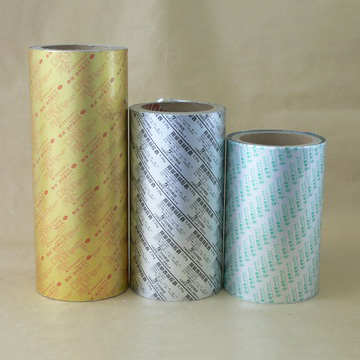
1、 Instruments and reagents:
10cm * 10cm standard cutting plate, blade, analytical balance (precision: 1/10000 g), muffle furnace, glass plate, stainless steel tweezers, ethyl acetate (analytical pure), absorbent cotton
2、 Test method:
1. Select the aluminum foil sample sheet for drug packaging with flat surface and no wrinkles, cut 5 test samples with a blade and a 10cm * 10cm standard cutting plate, and control the deviation of the width and length of the sample within ± 0.5mm
2. Weigh the cut sample (W1) on the balance.
3. Put the printing face of the aluminum foil on a glass plate, and use stainless steel tweezers to clamp the degreased cotton dipped in ethyl acetate to wipe the heat-sealing coating surface of the aluminum foil until no obvious marks can be identified when the surface is observed with naked eyes. (Note: The cotton ball dipped with ethyl acetate shall not have the liquid of ethyl acetate dripping. The circular wiping method from the center to the edge shall be used for wiping. The edge of the aluminum foil must be laid flat on the glass plate, and the linear wiping method shall be used for wiping. The other side of the aluminum foil shall not be affected during the whole process as much as possible). If the cotton ball has been wiped with the printing coating, replace it with a new cotton ball.
4. After wiping the heat-sealing coating, put the aluminum foil in a ventilated place and place it at room temperature for 2 minutes.
5. Then weigh the weight (W2) on the analytical balance
6. Place the above aluminum foil on the sample shelf in the muffle furnace preheated to 550-600 ℃. After waiting for a period of time, take out the coated aluminum foil and place it at room temperature. (The black ink may not completely volatilize the pigment, and its impact can be temporarily ignored for the products with general printed text patterns. If the printed patterns are large, the weight impact of the ink binder and the pigment should be considered)
7. Then weigh the weight (W3) on the analytical balance
Note: If the test sample has no adhesive layer, omit the operations in 2, 3 and 4.
8. Result calculation:
(W1-W2) × 100=weight of heat seal layer (g/m2)
(W2-W3) × 100=weight of printing layer/protective layer (g/m2) (when the sample has adhesive layer)
(W1-W3) × 100=weight of printing layer/protective layer (g/m2) (when the sample has no adhesive layer)
W3 × 100=weight of aluminum foil layer (g/m2)
Calculate and report the test results and average values of all individual samples to the nearest 0.01g/m2.
Related articles
-
China initially began to introduce equipment, technology and raw materials in the 1980s. In the 1990s, China has been able to manufacture single-color…
-
Aluminized composite film is a bright metallic film formed by evaporating high-purity aluminum wire into gaseous state at high temperature (1100~1200 …
-
Common problems and solutions of composite films. At the same processing temperature, the degree of oxidation will also vary with the type of extrusio…
-
What are the performance characteristics of composite membrane? Excellent mechanical function: tensile strength, elastic modulus, elongation, etc. tha…